Dominique Dalozo Bio
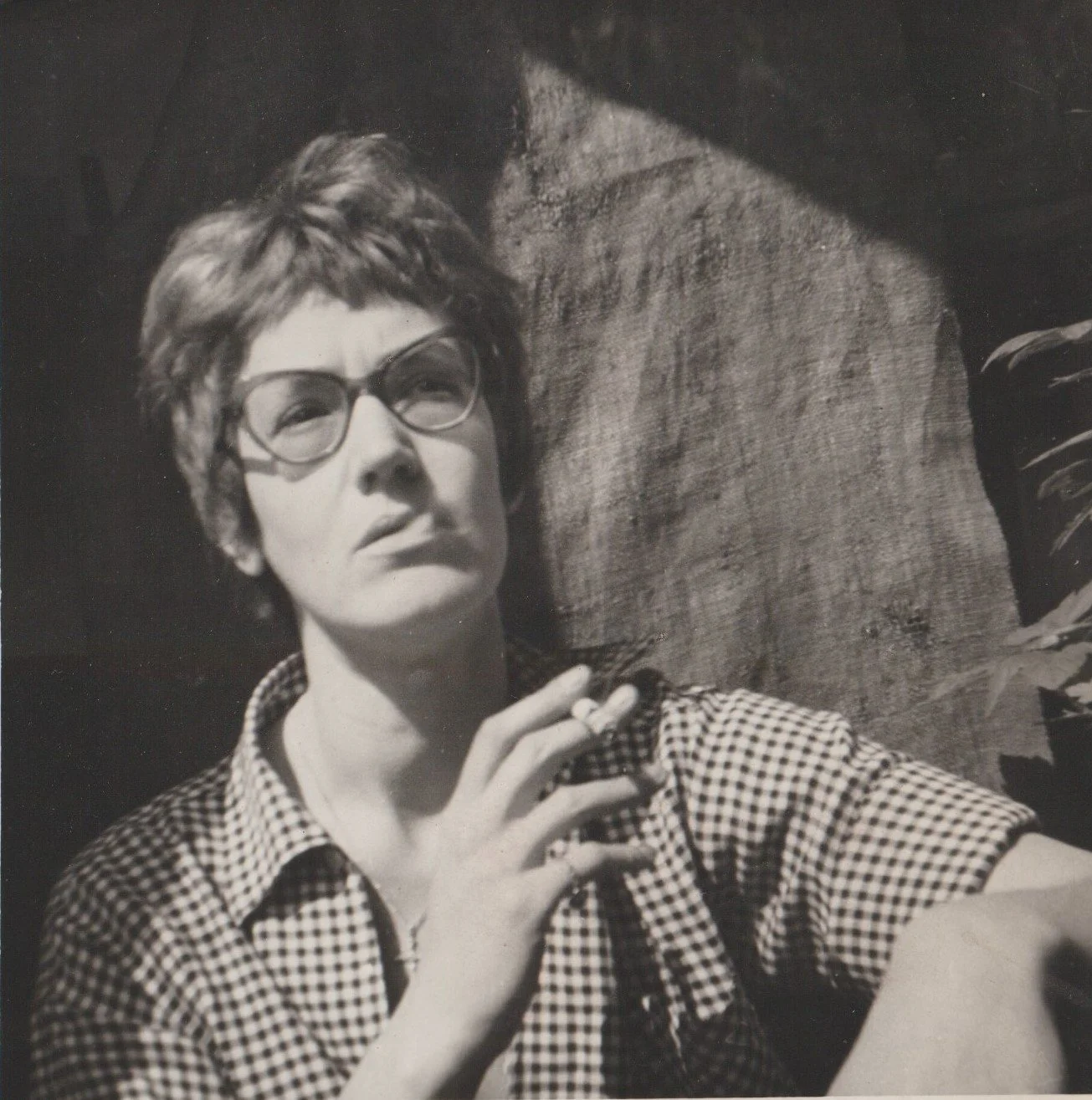
Dominique Dalozo, (Argentinian, 1926-2017)
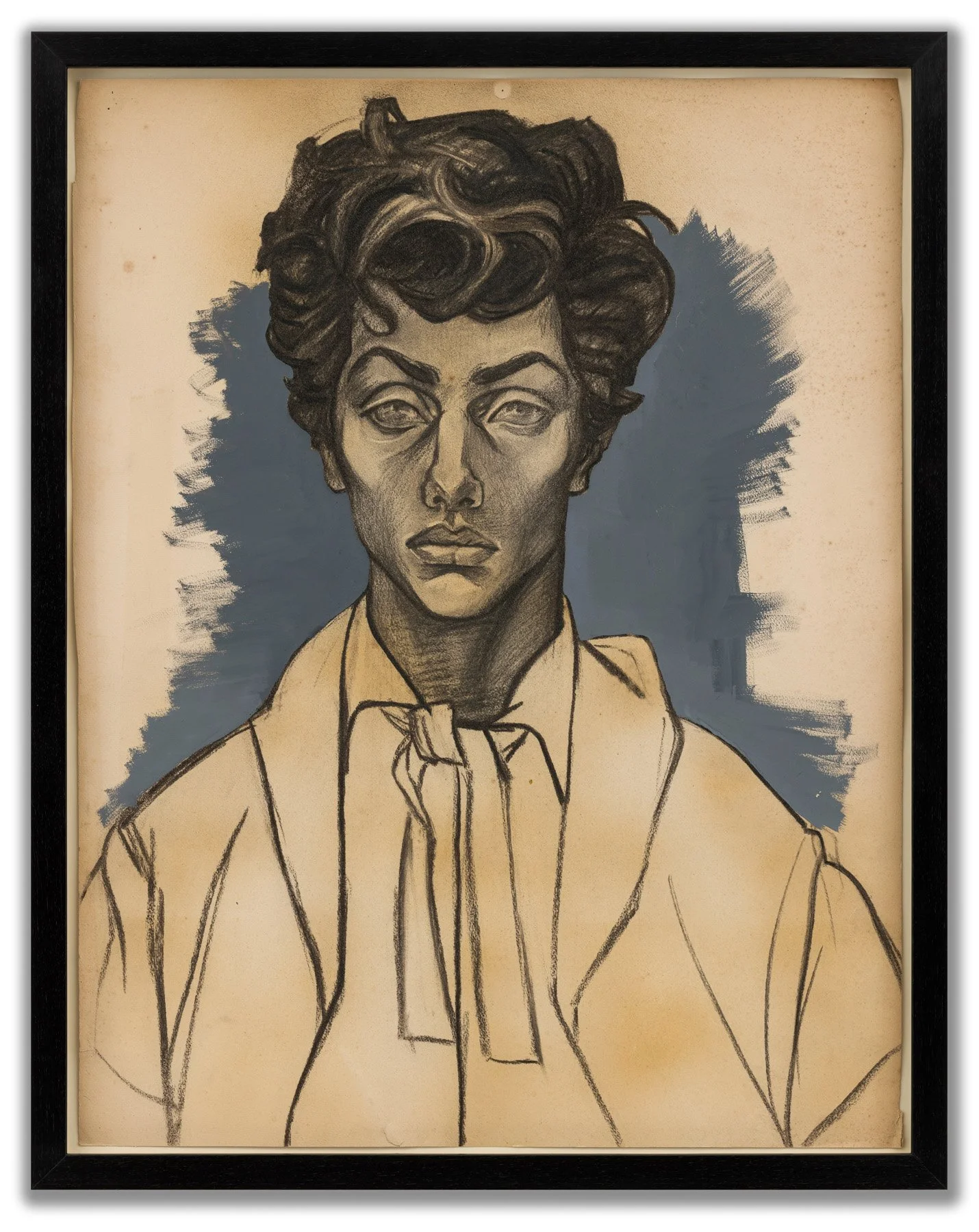
Dominique Dalozo, (Argentinian, 1926-2017), Portrait of a Young Man, c.1950s, charcoal and gouache on paper
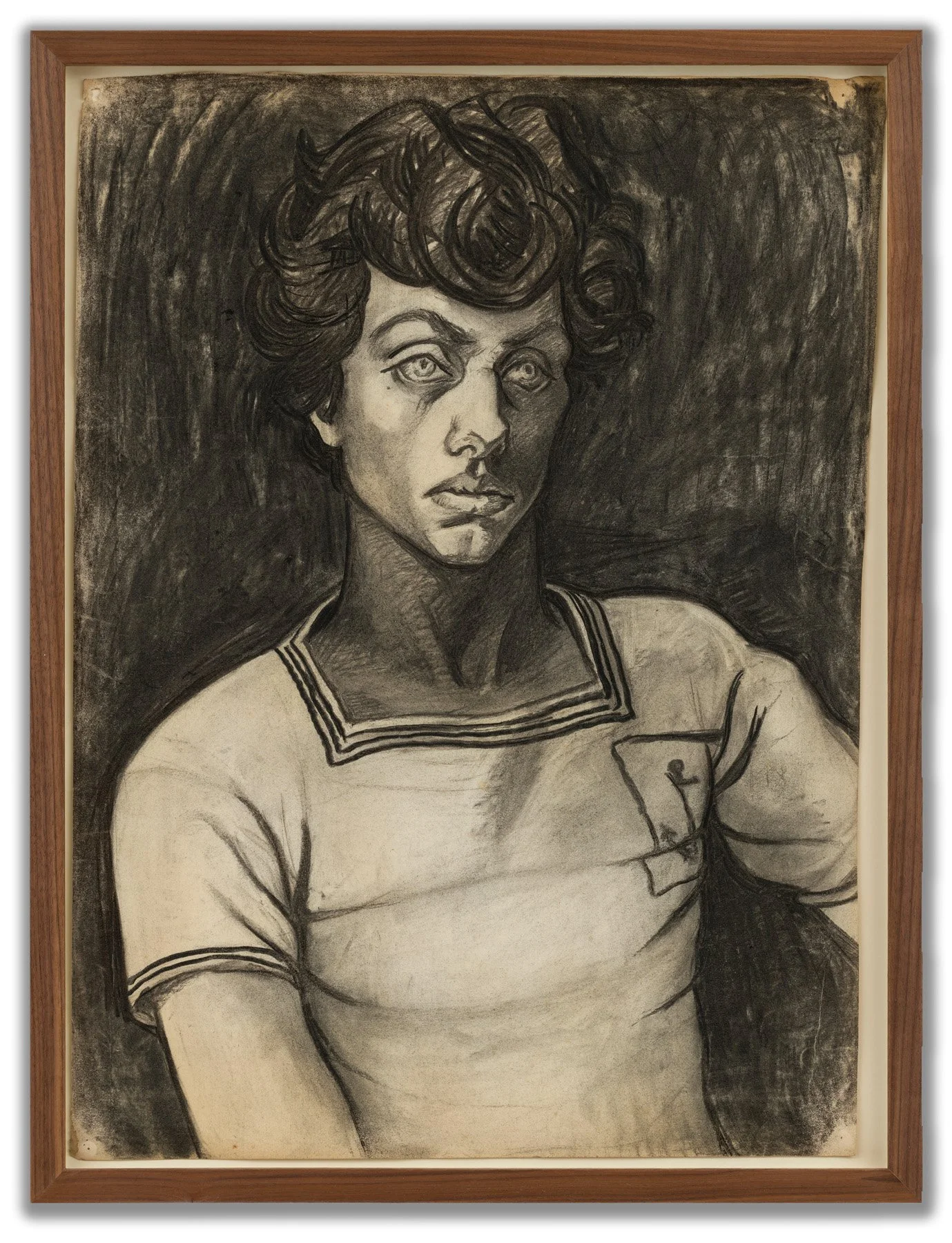
Dominique Dalozo, (Argentinian, 1926-2017), Portrait of a Young Man Dressed as a Sailor, c.1950s, charcoal and watercolour on paper
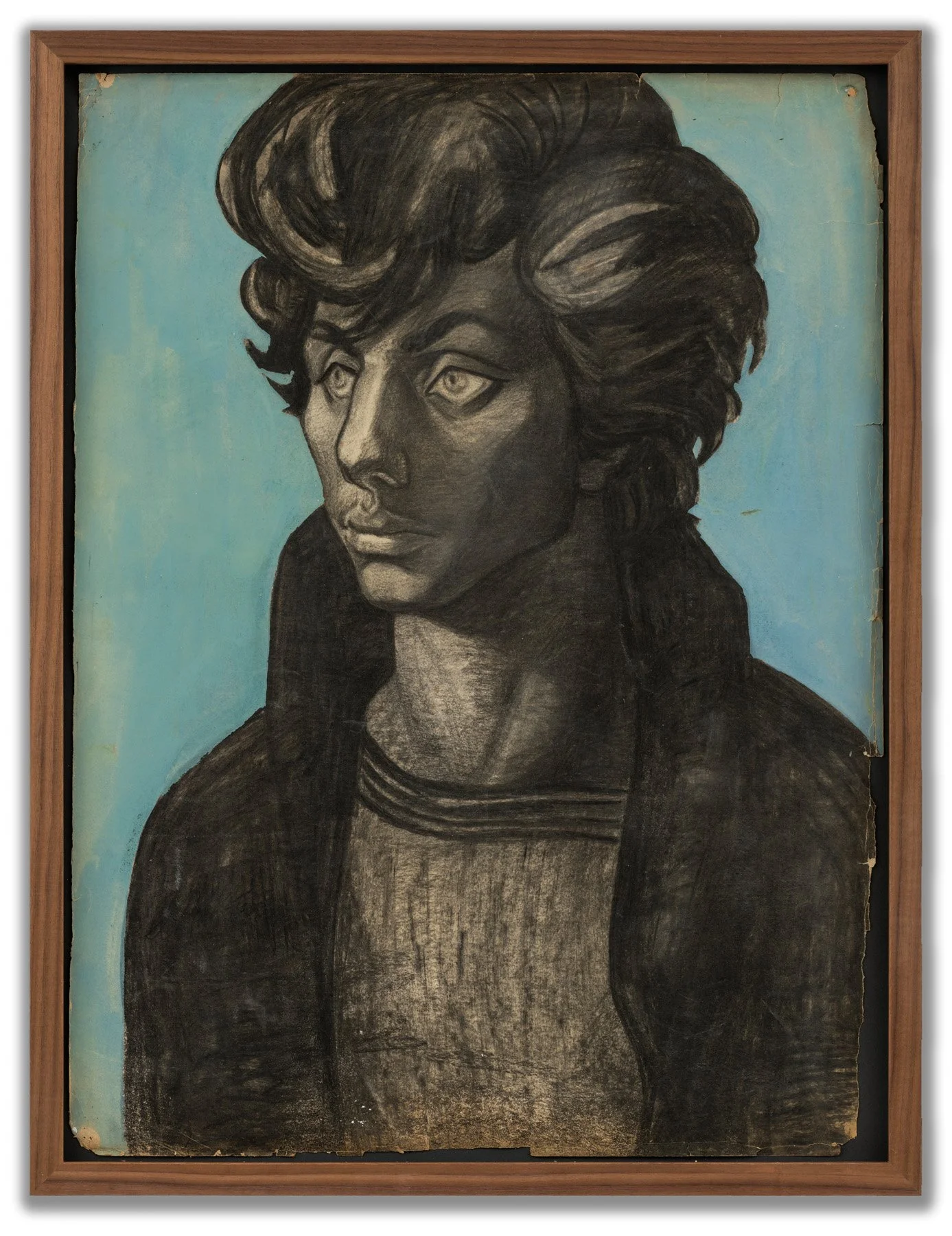
Dominique Dalozo, (Argentinian, 1926-2017), Portrait of a Young Man, c.1950s, charcoal and watercolour on paper
Dominique Irma Dalozo (Argentinian 1926-2017)
The Bad & the Beautiful, by Patrick Bade.
When Dalozo died in 2017 at the age of 91, her Paris studio was stuffed with a vast hoard of hundreds of paintings, thousands of drawings, and numerous boxes and suitcases filled with letters, documents and photographs. It was the accumulation of a multi-decade career or more precisely of two lengthy careers as there was also the work of her life-long companion Yvonne Bilis Regnier. The two women must have worked night and day and never or very rarely sold anything.
Dalozo and Regnier arrived in Europe in 1946. Both had been born and raised in Argentina. In one of those battered suitcases there were poignant photos of Regnier as a little girl with her prosperous and well-dressed family posed stiffly in front of a camera in their comfortable home and certificates of their graduation from art school (could that be where there met?) and a photograph taken from the decks of a ship of crowds on the quay beneath as they left for Europe.
It was an exciting time to arrive in Paris with the cultural and intellectual prestige of the Left Bank at its height. There is no sign that Dalozo and Regnier mixed with Sartre, Simone de Beauvoir and Juliette Greco though there is an intriguing sketch of Greco’s distinctive features on a sheet of miscellaneous studies. Instead. the two young women connected with a celebrated cultural figure of an earlier generation, Jean Cocteau. There exists a correspondence between them and clear evidence of Cocteau’s influence on Dalozo’s work.
There is something decidedly obsessive about their work. They created their own world, their own mythology, perhaps even their own religion with a complex and mysterious iconography. It is a world that is inhabited by angels, androgynous boys and girls and fantastic creatures.
There is little stylistic development over a period of seventy years and unless the work is signed and inscribed it can be difficult to tell one from the other. Regnier seems more preoccupied by the natural world and man’s relationship with it. She creates dreamlike landscapes in which trees and rocks morph into human form that lie somewhere between Claude Lorrain and Max Ernst. Her human figures are clumsily drawn like those of Claude but like the earlier artist she is cable of evoking exquisite effects of light and atmosphere.
Of the two, Dalozo is the more varied and inventive. On paper she explores a quite extraordinary range of styles and techniques. Her drawing of the human figure is more confident and accomplished than that of Regnier.
Away from this private dream world, the two women also observed the real world around them. They lived in handsome and very bourgeois apartment block in the rue Robert-Fleury in the 15th Arrondissement. It backed onto a tumbledown pre- Haussmann picturesque assemblage of rooves and chimneys that inspired them to make many drawings and paintings until it was swept away by re development in the 1970s. The interior of the flat piled up with books, paintings and LPs is also recorded in drawings and photographs
The two women were also constantly drawing themselves and each other and again it is not always easy to determine who is drawing whom. These portraits and photographs hint at an intense and possibly tumultuous relationship. We are glimpsing something dark and hidden – a scene from a novel or play by Sartre or Genet.
They posed for each other playing the role of “bad girls” with cigarettes daggling provocatively daggling from their mouth and a defiant stare. Another carefully posed photograph shows them solemnly staring into a mirror with Dalozo’s arm protectively resting on Regnier’s shoulder.
A blue tinted close up sketch of Regnier’s furious face with hair flailing Medusa-like around her head is positively demonic. There are scowling and sulky portraits or self portraits but also some more relaxed and gentle images- Regnier sketching in a shady corner of a garden or working at her desk with a little dog at her feet. Pets, whether dogs or cats seemed to bring out a gentler and more affectionate side of their personalities.
The lives and careers of Dominique Irma Dalozo and Yvonne Bilis Regnier are waiting to be re-discovered in the light of contemporary interest in neglected women artists, women surrealists, “queer” narratives, outsider art and man’s relationship with the natural world.
In the 1950s, Dalozo made a remarkable and powerful series of bust or half-length charcoal portraits of young men and women. They are large format, sometimes over life sized and occasionally enhanced with a flat coloured ground. The women are drawn from a variety of models, but all are troubled, angry and some are outright menacing. The male portraits are taken from the same model, a beautiful, slightly androgynous young man with full lips, an aquiline nose and an unruly mop of blacky curly hair. His distant gaze is sultry, untroubled and slightly vacant. Whatever her sexual proclivities Dalozo was clearly fascinated by the beauty of this young man and made a number of nude or semi-nude studies of his lithe and muscular body, something she does not seem to have done with any of the female models in the series. It is perhaps significant that one of these drawings shows the naked young man in the traditional pose of Narcissus admiring his reflection in a pool.
The contrast in the depiction of the genders is striking and the psychological undertones disturbing. Many questions present themselves, but Dalozo is no longer here to answer them and they will now probably never be resolved unless clues can be found in the extensive correspondence that was left behind in her studio.
A selection of these wonderful male portraits, are those offered for sale by Henry Miller Fine Art.