Photography
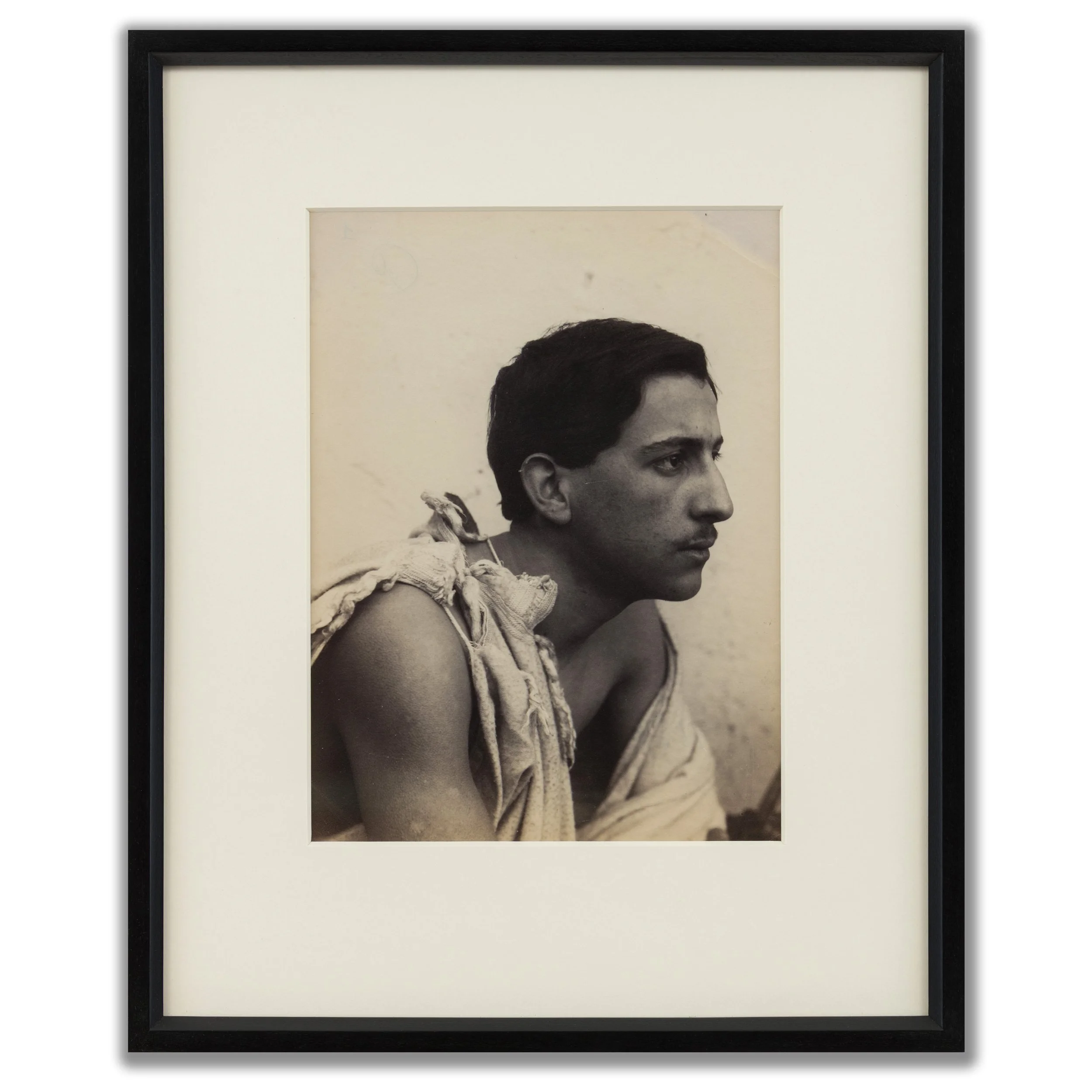
Vincenzo Galdi, 'Portrait of a Young Man'
Vincenzo Galdi, 'Portrait of a Young Man'
Vincenzo Galdi Italian 1871-1961
Portrait of a Young Man
£2,750
Albumen print
Photographer’s “Via Sardegna 55, Roma” stamp and number “1156” in pencil (verso)
22.5cm x 16cm (print size) (35cm x 29cm framed)
Galdi was an Italian photographer and model who played a central role in early European homoerotic photography. Born in Naples, Galdi began his artistic career in front of the lens during the late 1880s as the primary model—and probable romantic partner—of German photographer Wilhelm von Plüschow. Posing nude in classical, Arcadian, and Mediterranean settings alongside cousins Wilhelm von Gloeden and Plüschow, Galdi’s athletic physique epitomised the late-19th-century ideal of classical male beauty.
By the late 1890s, Galdi transitioned from modelling to running his own photographic studio in Rome, building an extensive portfolio of nudes. While contemporary counterparts like Wilhelm von Gloeden wrapped their homoerotic images in romantic, mythic, and classical pretexts (such as Greco-Roman drapery and olive wreaths), Galdi’s work leaned much more directly into explicit sensuality and raw physical desire. Galdi rejected artificial pseudo-historical staging in favour of intimate indoor studio settings. His depictions of male models emphasised physical presence, touch, and explicit sexual availability—breaking long-standing taboos surrounding male nude portraiture in turn-of-the-century Europe.
Because Galdi pushes past classical artistic allegory into unfiltered eroticism, his studio attracted heavy legal scrutiny. In 1907, a public moral scandal led Italian authorities to confiscate thousands of his prints and close his operation on charges of obscenity. Following the raid, Galdi abandoned commercial erotic photography and spent the rest of his life as an art dealer on Rome's Via del Babuino. Despite the suppression of his work, surviving prints make him a vital, pioneer figure in early queer photography and turn-of-the-century homoerotic art history.