Postwar
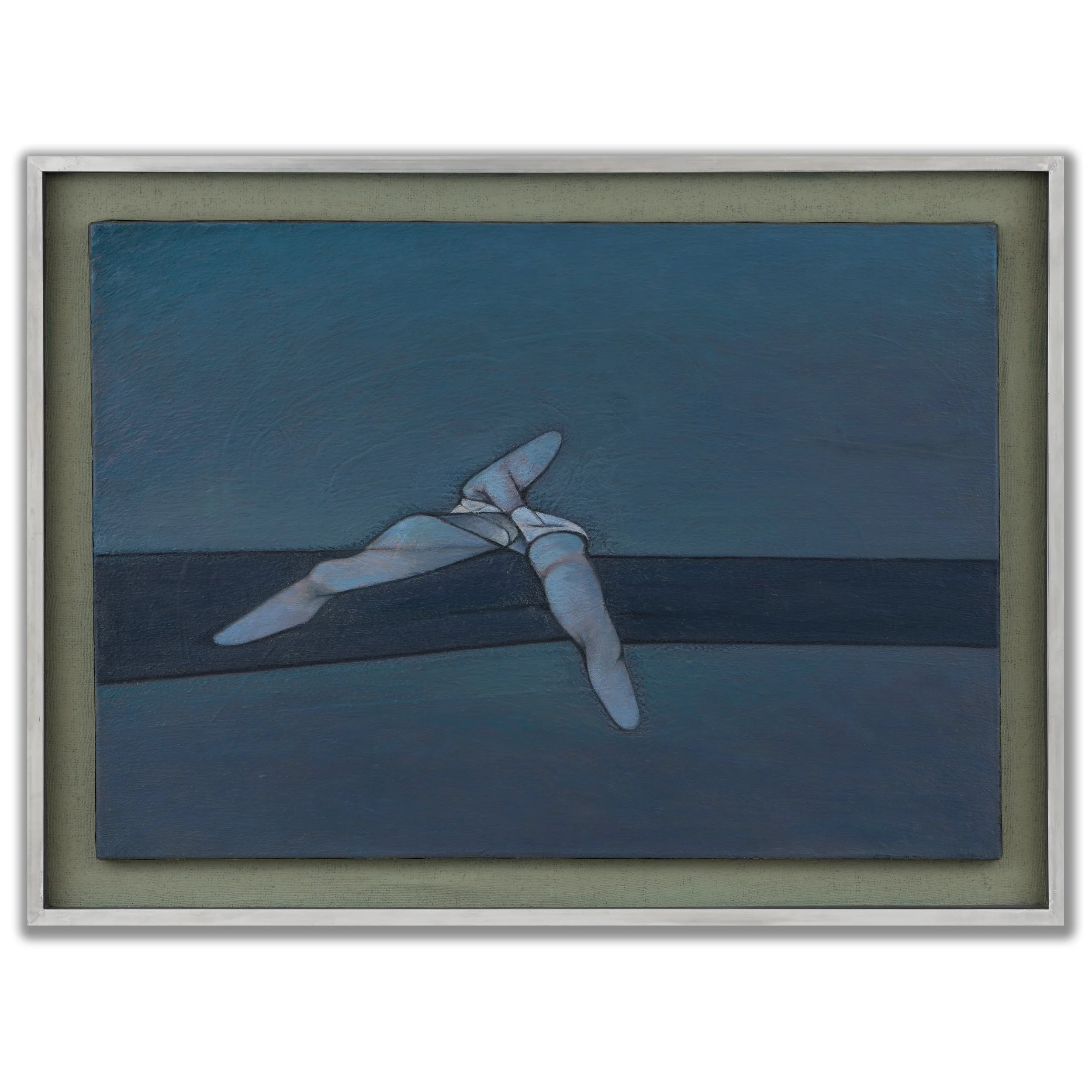
Wilfred Avery, 'Pharos', 1965-1969
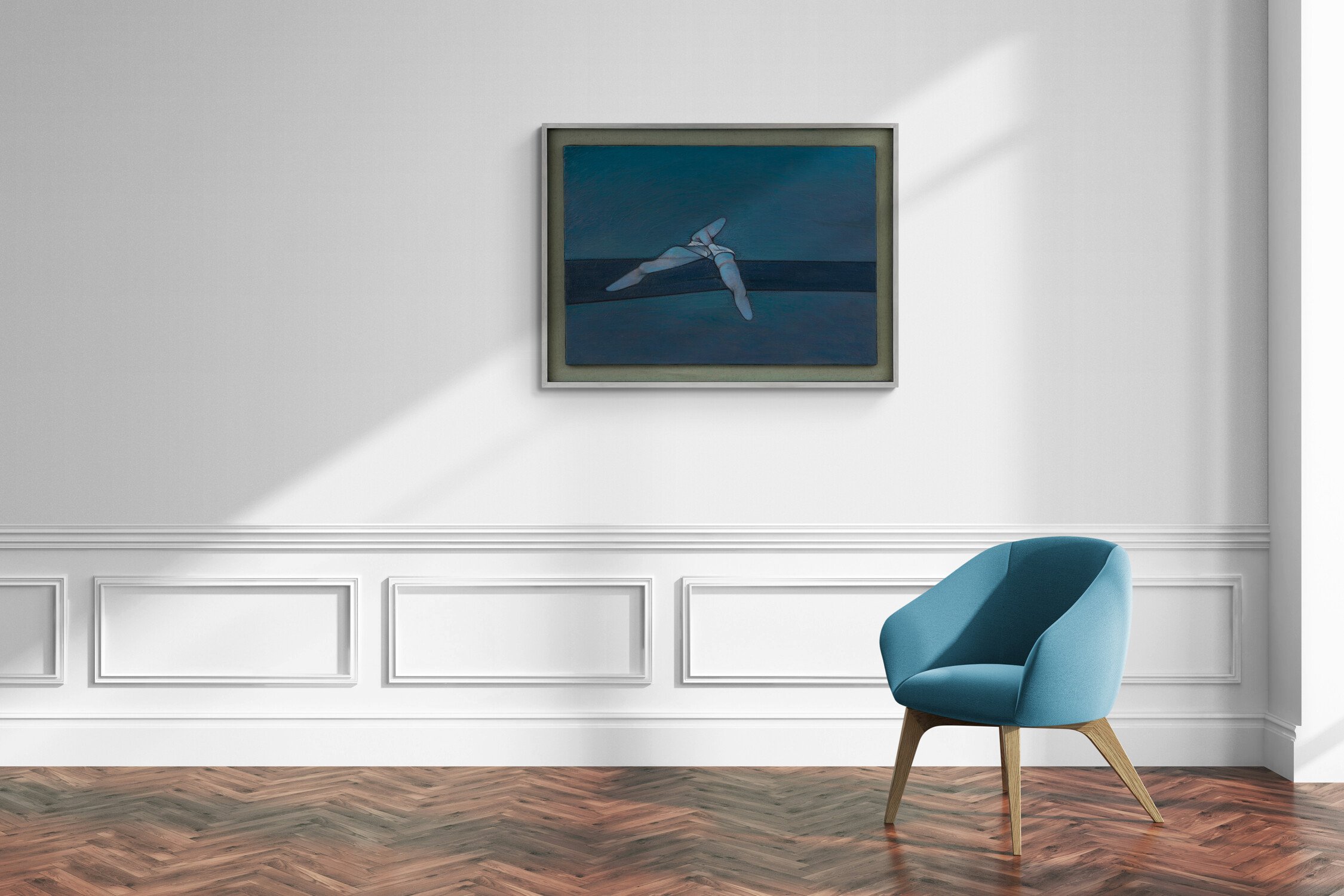
Wilfred Avery, 'Pharos', 1965-1969
Wilfred Avery, British 1926-2016
Pharos, 1965-1969
£6,000
Oil on canvas
Signed and dated (verso)
71cm × 102cm (86cm × 116cm framed)
Wilfred Avery was a British modern painter and collagist whose six-decade career focused primarily on two interwoven subjects: the natural landscape and the male figure. Influenced by Cubism, depth psychology, and his own identity as a gay man, Avery produced enigmatic, deeply personal works that bridged the physical and psychological worlds. Born in South Molton, Devon, his upbringing near the rugged Devon coastline instilled a lifelong love for the English countryside, a motif that recurred throughout his work.
Avery studied painting at St Paul’s College in Cheltenham. During his studies, he met the influential British artist Paul Nash, who encouraged him to look toward Paris and modern European artists—such as Paul Cézanne, Georges Braque, and Pablo Picasso—rather than London or New York for inspiration. Moving to London in 1952, Avery began showing at prominent post-war galleries, including Helen Lessore’s Beaux Arts Gallery and Victor Musgrave’s Gallery One. During the late 1950s, he also designed theatre sets alongside his twin brother, Samuel Lock.
Early in his career, Avery depicted male figures in quiet, intimate, domestic spaces. At a time when homosexuality was criminalised in the UK, his artwork presented radical yet tender portrayals of the male form and intimacy. From the late 1950s onwards, he developed a thick impasto style, capturing the hills, cliffs, and waters of Devon and Yorkshire in semi-abstract, Cubist-influenced forms. Heavily influenced by the analytical psychology of Carl Jung, Avery embraced what he called "the unpredictable image"—allowing the subconscious to guide his composition. Over time, he fused the forms of the human body and natural landscapes into unified, morphing shapes.
Avery lived a quiet life focused intently on his studio practice, settling in Blackheath, Southeast London, for much of his later career. He passed away in Eastbourne on April 26, 2016. Today, his work is held in several public and private collections across the United Kingdom and internationally, including The Ingram Collection, The Jerwood Collection, the Royal Albert Memorial Museum, and Sheffield Museums.